
The Irreplaceability of Japanese Material Suppliers in the HBM Supply Chain
High-Bandwidth Memory (HBM) has quickly become a strategic pillar of modern AI, HPC, and accelerator architectures. Behind the headlines about wafers, interposers, and packaging capacity lies a quieter but crucial reality: a small cluster of highly specialized Japanese material suppliers provides many of the chemicals, precision films, specialty substrates, and consumables that enable reliable, high-yield HBM production.

Why Japan matters for HBM materials
Japan’s centrality to advanced semiconductor materials stems from decades of focused investment in chemistry, precision manufacturing, and supply continuity. Several structural reasons explain the country’s outsized role:
- Deep technical expertise in specialty chemistries and ceramics developed over many technology generations; these chemistries meet the ultra-low impurity and particle specifications HBM processes demand.
- Highly automated, quality-driven production infrastructure that consistently delivers low-defect materials at the tight tolerances required for TSV liners, ALD precursors, underfills, and thermal interface films.
- Long-term, relationship-based commercial models: Japanese suppliers often provide custom formulations, co-development support, and rigorous lot-traceability—services that matter for yield-sensitive packaging steps.
- Concentration of niche upstream suppliers: in many cases there are only a handful of global vendors for specific high-performance materials, and Japanese firms occupy several of these narrow niches.
Because HBM moves electrical, thermal, mechanical, and chemical limits simultaneously—thin dies, fine-pitch hybrid bonds, TSVs, and high-power thermal paths—material quality and reproducibility become first-order constraints. That’s where Japanese suppliers excel.
Material categories where Japanese suppliers are dominant
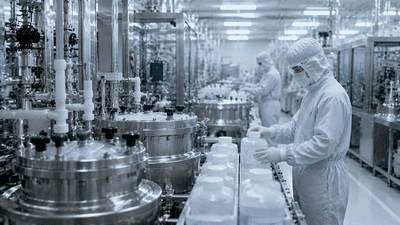
Not every material used in HBM is produced in Japan, but several categories essential to yield, reliability, and performance have strong Japanese leadership. Key categories include:
- Ultra-high-purity precursors for ALD/CVD: Metal-organic precursors (copper, cobalt, tungsten variants) and specialized organometallic compounds with extremely low metal or particle contamination are frequently sourced from Japanese manufacturers or their joint-venture offshoots.
- Precision dielectric and low-k films: Thin, uniform dielectric films and fine-pitch RDL dielectrics—used to control capacitance and signal integrity—are produced at world-class quality by Japanese chemical makers.
- Thermally conductive yet electrically insulating films and adhesives: High-performance TIMs, filled polymer films with boron nitride or ceramic fillers, and engineered anisotropic conductive films are often supplied by Japanese firms with decades of material science work in thermal interface materials.
- CMP slurries and polish consumables: Low-defect CMP slurries and pads tailored for ultra-thin wafers and TSV planarization come from Japanese specialty-chemistry suppliers with tight particle-size distributions and stability controls.
- High-performance substrates and films: Thin polyimide films, barrier films, and specialty adhesives for temporary bonding and underfills are dominantly produced or innovated in Japan for critical packaging flows.
- Filtration, ultrapure water, and contamination-control consumables: Particle and metal contamination control depend on filters, resins, and ultrapure water systems manufactured and supported by Japanese firms with rigorous quality regimes.
Each of these categories contributes disproportionately to final yield and reliability. Substituting a material that appears similar on paper but lacks the stringent quality profile of a Japanese product can increase defect density, slow yield ramps, and raise warranty risk.
How Japanese suppliers enable high-yield HBM production
The value of Japanese suppliers goes beyond individual material specs. Their contribution to yield and throughput is multi-dimensional:
- Recipe co-development: Suppliers often work closely with IDMs and OSATs to tune chemistries and process windows for specific toolsets and product geometries, shortening qualification cycles.
- Consistent lot-to-lot performance: Low variability reduces root-cause hunting and retest cycles—an essential factor when hybrid bonding and TSV fills are sensitive to minute contamination.
- Global support and rapid response: Japanese firms typically provide structured technical support, clean-room training, and strict traceability that accelerate yield-learning in pilot lines.
- Material roadmap alignment: Many suppliers invest in incremental improvements (lower particle counts, new filler materials, higher thermal conductivity) timed to packaging and memory roadmaps, enabling vendors to plan ahead.
In short, Japanese material suppliers are often enablers of predictable, repeatable production rather than mere commodity vendors—a key distinction for HBM, where unpredictable yield or latent failures can be extremely costly.
Supply-chain risk: why “irreplaceable” is an operational, not ideological claim
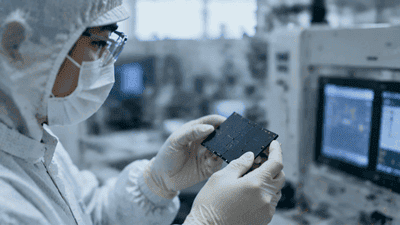
Labeling Japanese suppliers “irreplaceable” risks oversimplifying reality, but it accurately captures operational fragility in certain material niches. Key risk factors include:
- Single- or few-source situations: For some precursors, slurries, or specialty films, there are only a handful of qualified global suppliers; disruptions in those suppliers can materially affect production.
- Long qualification times: Substituting a material—even a close analog—requires extensive qualification across electrical, thermal, and mechanical reliability tests that can take months to years for HBM modules.
- Tool and process lock-in: Material recipes are often co-optimized with specific tool families and process flows. A material change may necessitate tool requalification or process revalidation, creating additional lead time.
- Geographic concentration: Although Japan has high industrial redundancy, regional disruptions (earthquakes, supply-chain logistics shocks) or export-control scenarios can still create temporary scarcity for global customers who rely on Japanese sources.
Therefore, “irreplaceable” is a practical term: replacing these suppliers in the short-to-medium term is often impractical without significant cost, time, and technical risk.
Case examples where Japanese materials made a difference
Several anonymized, representative cases illustrate the operational impact of Japanese material leadership:
- Case A — ALD precursor stability: A leading memory maker switched to a locally available precursor during a temporary supply hiccup. The substitute had a slightly higher trace-metal level that did not show immediate failures but increased early-life drift and required retesting—delaying qualification and costing multiple engineering-months of yield recovery work.
- Case B — TIM film innovation: A Japanese supplier's high-thermal-conductivity, electrically insulating film enabled a new microfluidic thermal interface design for HBM stacks. The film’s combination of thin bondline and low outgassing made higher sustained stack power possible; alternative films failed long-term reliability tests.
- Case C — CMP slurry particle control: Fine particle distribution in a Japanese CMP slurry reduced subsurface damage and improved hybrid-bond alignment yields. When a batch-quality issue occurred at the supplier, the memory maker observed measurable yield degradation across multiple production lots until the supplier corrected the issue.
These scenarios show how small material differences—often invisible in standard spec sheets—translate into outsized production and schedule consequences for HBM.
Strategies for managing dependence while preserving capability
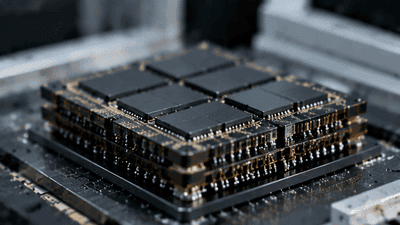
Given Japan’s critical role, companies should adopt pragmatic hedges that both respect supplier strengths and reduce single-point risks. Recommended actions:
- Early qualification of alternates: Start parallel qualification programs with non-Japanese suppliers for lower-risk material variants. Even if alternate materials are not used initially, qualification shortens switch time in disruptions.
- Co-development and long-term contracts: Enter multi-year agreements and co-development partnerships with Japanese suppliers to secure prioritized capacity, joint roadmaps, and improved lead-time guarantees.
- Strategic inventory policies: For the most sensitive materials, maintain safety stocks and rotating inventories with strict traceability and storage controls to buffer short-term supply gaps.
- Dual-sourcing where possible: For materials with multiple viable suppliers globally, implement qualification and supplier-split strategies that keep both qualified and active channels to reduce single-source risk.
- Local manufacturing and licensing: In regions with policy sensitivity, consider licensing or joint-venture manufacturing with Japanese partners to build local production under shared IP and qualified processes.
- Investment in supplier ecosystems: Encourage supplier capacity expansion via long-term offtake agreements or minority investments when the business case supports shared upside and supply security.
These measures balance the need to preserve the high technical standard Japanese suppliers provide while reducing exposure to concentrated single-source risk.
Implications for different stakeholders
How dependence on Japanese suppliers affects various stakeholders and what each should prioritize:
- Memory makers and OSATs: Prioritize deep technical relationships, co-development, and prioritized contracts. Invest in qualification labs and cross-material testing to reduce switch time in disruptions.
- Hyperscalers and OEMs: Negotiate supply agreements that include materials availability clauses and co-funding for supplier capacity expansions. Factor material fragility into TCO and lead-time planning.
- Materials suppliers and Japanese firms: Continue investing in automation, redundancy, and global support footprints. Offer qualification toolkits and golden-lot programs to ease new-customer onboarding.
- Investors: Evaluate memory and packaging firms’ exposure to single-source materials and prefer those with clear mitigation plans (dual-sourcing, long-term contracts, or owning critical materials stakes).
- Policymakers: Recognize the strategic importance of specialty materials. Facilitate cross-border cooperation, fast-track environmental and safety approvals for capacity expansions, and encourage workforce programs supporting high-precision chemistry sectors.
Potential disruption scenarios and contingency planning
Companies should test contingency plans against plausible disruption scenarios to ensure resilience. Examples to simulate in tabletop exercises:
- Short-term production suspension at a dominant Japanese precursor plant—test inventory and supplier substitution plans for 4–12 week outages.
- Export-control escalation limiting supply of a critical high-purity film—simulate licensing, local production ramp, and requalification timelines.
- Regional logistics disruption affecting several suppliers simultaneously—stress-test multi-supplier sourcing, prioritized allocation, and customer communication protocols.
- Quality-event-induced hold (e.g., a contaminated batch from a supplier)—evaluate traceability, recall protocols, and the operational cost of rework or extended qualification cycles.
Contingency planning exercises should include cross-functional stakeholders—procurement, process engineering, QA, legal, and customer relations—to ensure coordinated responses that minimize schedule and reputation damage.
Longer-term trends and what might change the landscape
Several developments could reduce or reinforce Japan’s relative position over the next five to ten years:
- Global supplier development: Increased investment by non-Japanese chemical firms or successful tech transfer could create credible alternatives for some material classes, easing concentration risk.
- Material innovation: Breakthroughs in alternative chemistries or new packaging paradigms (e.g., reduced reliance on ALD precursors or different thermal interfaces) could change sourcing patterns.
- Policy and trade dynamics: Export controls, subsidies, or strategic partnerships will affect where suppliers locate capacity and how readily materials can flow across borders.
- Verticalization by memory makers: Some IDMs might internalize critical material production if economics and scale justify it, though this is capital-intensive and slow.
For now, Japanese suppliers’ combination of technical depth, quality, and ecosystem services make them an operationally critical part of the HBM value chain, but the landscape is not immutable.
Practical checklist for supply-chain managers
A concise checklist to operationalize resiliency when relying on Japanese material suppliers:
- Map critical materials and single-source exposures in your BOM with clear risk ratings.
- Initiate parallel qualification programs for alternate suppliers for top-risk materials within 6–18 months.
- Negotiate long-term supply and priority allocation agreements with Japanese suppliers for top-tier materials.
- Establish strategic safety stock levels guided by lead time and requalification cost, with periodic review.
- Invest in supplier co-development projects to align roadmaps and gain early access to next-generation materials.
- Run disruption tabletop exercises annually and update contingency plans based on evolving supplier footprints.
Conclusion
Japanese material suppliers play an outsized and technically essential role in enabling HBM production at scale. Their strengths lie not only in product quality but in recipe co-development, lot consistency, contamination control, and the services that speed yield learning—factors that matter enormously for hybrid bonding, TSV formation, and thin-die packaging. While dependence on a small set of high-quality suppliers introduces supply-chain fragility, pragmatic mitigation—early alternative qualification, long-term partnerships, strategic inventory, and selective co-investments—can preserve operational continuity without sacrificing the performance advantages these materials enable.
For memory makers, OSATs, OEMs, and hyperscalers, the right stance is neither uninformed skepticism nor blind dependence: it is recognition of where world-class materials make the difference and constructive engagement to secure resilience. For policymakers and investors, supporting diversified, high-quality material supply chains—while preserving channels to collaborate with established Japanese suppliers—will be critical to sustaining a reliable global HBM ecosystem.